

What Does O Temper Mean in Aluminium?
The letter O identifies aluminium that has been annealed to obtain its lowest-strength condition. Annealing reduces the effects of previous cold working or heat treatment and restores ductility.
O temper is not an aluminium grade. It must follow an alloy designation:
- 1050-O
- 1100-O
- 3003-O
- 5052-O
- 5083-O
- 6061-O
The alloy number identifies the chemical composition. The O suffix identifies the material condition.
Industry temper systems use the primary letters F, O, H, W and T. Hydro describes O as the annealed condition used to maximise workability, toughness and ductility. The temper system should be interpreted under the applicable designation standard and product specification. Hydro’s temper guide
Quick Buyer Answer
| Buyer question | Practical answer |
|---|---|
| What is O temper aluminium? | Aluminium annealed to obtain a soft, ductile and highly formable condition. |
| Is O an aluminium alloy? | No. O is a temper suffix added to an alloy number, such as 1100-O or 5052-O. |
| Why do buyers choose O temper? | Mainly for severe forming, bending, drawing, spinning or fabrication requiring high ductility. |
| Is O temper strong? | It normally has the lowest strength and hardness available for that alloy. |
| Can every aluminium alloy be supplied in O temper? | Many wrought alloys can be annealed, but commercial availability depends on the alloy, product form, dimensions and standard. |
| What must be stated in an enquiry? | Alloy, O temper, product form, dimensions, quantity, forming process, standard and delivery requirement. |
How Aluminium Reaches the O Condition
O temper is produced by a controlled annealing cycle. The exact treatment depends on the alloy, previous processing, section thickness and final product requirements.
Heating
The aluminium is heated to a temperature appropriate for the alloy and product form. This treatment reduces the internal effects created by strain hardening or previous processing.
Controlled Holding
The material is held under controlled conditions long enough for the required metallurgical changes to occur throughout the section.
Controlled Cooling
The product is cooled using a route suitable for the alloy and required final condition.
The treatment reduces hardness, relieves part of the previous work-hardening effect and improves ductility. It does not change one aluminium grade into another.
Key Characteristics of O Temper Aluminium
Exact properties must be checked against the selected alloy, thickness and product standard.
| Characteristic | General O temper behaviour | Why it matters |
|---|---|---|
| Strength | Usually the lowest-strength condition of the alloy | May not suit a finished load-bearing part without further processing |
| Hardness | Lower than strain-hardened or precipitation-hardened tempers | Makes forming easier but can increase scratching or handling damage |
| Ductility | Generally high | Supports drawing, bending and shape development |
| Formability | Usually the principal advantage | Suitable for parts involving substantial plastic deformation |
| Bendability | Better than harder tempers of the same alloy | Can permit smaller bend radii, subject to alloy and thickness |
| Springback | Often lower than in harder tempers | Can improve formed-part control |
| Machinability | Often less favourable than harder conditions | Soft material may produce built-up edges or less-controlled chips |
| Wear resistance | Relatively low | Finished parts exposed to abrasion may require another alloy, temper or surface protection |
| Dimensional rigidity | Lower than stronger tempers | Thin or unsupported parts can deform during handling |
| Corrosion resistance | Governed primarily by alloy and environment | O temper alone does not make aluminium corrosion-proof |
| Weldability | Determined mainly by the alloy | Welding suitability must be checked separately |
| Surface finishing | Alloy- and process-dependent | Anodising appearance and coating response require confirmation |
- Chemical composition
- Corrosion resistance
- Weldability
- Forming response
- Final strength
- Surface-finishing response
- Service-temperature behaviour
Aluminium Alloys Commonly Considered in O Temper
Commercial availability varies by product form, thickness, dimensions, standard and production route.
| Alloy and temper | General selection reason | Common buyer requirements |
|---|---|---|
| 1050-O | High aluminium content, good ductility and general corrosion resistance | Electrical, chemical, reflective and deeply formed parts |
| 1060-O | Soft commercially pure aluminium with high formability | Electrical parts, chemical equipment and formed components |
| 1100-O | High formability and useful fabrication characteristics | Circles, utensils, spun parts, containers and general sheet-metal work |
| 3003-O | Formability with greater strength than commercially pure aluminium | Tanks, containers, roofing parts and formed industrial components |
| 5052-O | Good forming potential with useful corrosion resistance | Marine-related fabrication, enclosures, tanks and formed sheet components |
| 5083-O | Annealed condition of a marine and structural aluminium-magnesium alloy | Formed and welded components where specified by the design |
| 5754-O | Formability and corrosion resistance | Automotive panels, tanks, flooring and general fabrication |
| 6061-O | Soft condition used when significant forming is needed before final heat treatment | Formed engineering components and fabrication blanks |
| 6063-O | Annealed condition of an extrusion-oriented alloy | Profiles requiring post-extrusion forming, subject to availability |
Important Grade Distinction
Non-heat-treatable 1xxx, 3xxx and 5xxx alloys are normally strengthened by cold working and use O or H-series tempers.
Heat-treatable 2xxx, 6xxx and 7xxx alloys can also exist in O temper, but a buyer may choose O only as an intermediate forming condition. The component may require a later qualified heat-treatment route to obtain its intended final strength.
Do not assume that a formed 6061-O component will automatically perform like 6061-T6.
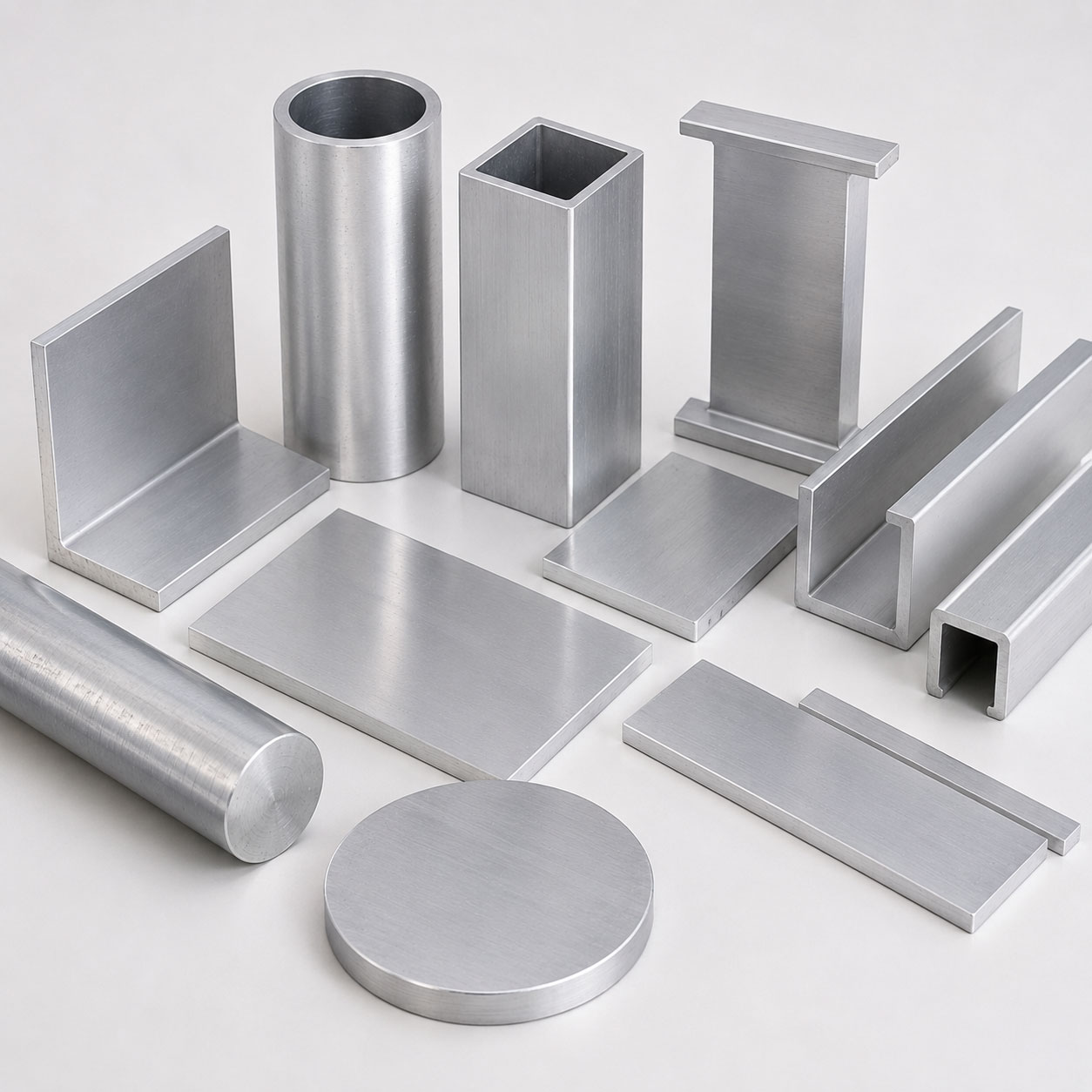
O Temper Aluminium Product Forms
Solitaire Steel & Engineering LLP can review requirements for appropriate O temper products, subject to actual availability.
| Product form | Details buyers should specify |
|---|---|
| O temper aluminium sheets | Alloy, thickness, width, length, surface, tolerance and forming operation |
| O temper aluminium coils | Alloy, thickness, width, coil ID/OD, coil weight and required finish |
| O temper aluminium strips | Thickness, width, coil or cut length, edge condition and fabrication process |
| O temper aluminium plates | Alloy, thickness, dimensions, flatness and intended forming or fabrication |
| O temper aluminium circles | Alloy, diameter, thickness, edge condition and spinning or drawing requirement |
| O temper aluminium blanks | Final blank dimensions, tolerance, grain direction and forming operation |
| O temper aluminium foils | Alloy, thickness, width, condition and end application |
| O temper aluminium pipes | OD, wall thickness, length, standard and bending requirement |
| O temper aluminium tubes | OD/ID, wall thickness, shape, tolerance and forming route |
| O temper aluminium bars | Cross-section, dimensions, length and subsequent forming or heat-treatment requirement |
| O temper aluminium extrusions | Alloy, profile drawing, section dimensions, straightness and post-extrusion forming need |
| O temper aluminium wire | Alloy, diameter, coil requirement and fabrication process |
The exact temper and permissible tolerances should be confirmed through the governing product standard.
Where Is O Temper Aluminium Used?
O temper is normally chosen because a component must be shaped—not simply because a soft material is easier to purchase.
Deep Drawing
O temper sheets, coils, circles and blanks may be evaluated for:
- Deep-drawn containers
- Kitchenware
- Lighting reflectors
- Equipment covers
- Cylindrical housings
- Tank components
- Formed enclosures
- Multi-stage drawn parts
Buyers should specify draw depth, number of stages, lubrication, tool design, grain direction and permitted thinning.
Spinning and Circle Applications
Soft aluminium circles are commonly considered for:
- Cookware
- Utensils
- Reflectors
- Covers
- Funnels
- Domes
- Circular housings
- Decorative and industrial spun parts
Diameter, thickness uniformity, surface quality and edge condition can directly affect spinning results.
Bending and Roll Forming
O temper may suit:
- Tight-radius bends
- Rolled cylindrical components
- Curved covers
- Formed panels
- Channels produced from sheet
- Duct components
- Fabricated tanks
- Complex sheet-metal profiles
The achievable bend depends on the alloy, thickness, orientation, tooling and bend radius.
Automotive and Transport Components
Appropriate O temper alloys may be evaluated for:
- Formed panels
- Heat shields
- Covers
- Tank components
- Interior parts
- Lightweight fabricated sections
A finished safety- or load-critical part must meet the specified final mechanical and fatigue requirements.
Electrical and Thermal Components
Commercially pure O temper aluminium may be considered for:
- Busbar-related formed parts
- Electrical stampings
- Heat-transfer components
- Reflectors
- Foil components
- Formed conductive parts
Electrical conductivity depends primarily on the alloy and applicable specification—not on the O suffix alone.
Marine and Corrosion-Exposed Fabrication
Selected 5xxx-series O temper alloys may suit formed marine or outdoor components. The buyer must still evaluate:
- Direct seawater exposure
- Galvanic contact
- Welding procedure
- Final component strength
- Protective finish
- Applicable marine or customer specification
Packaging and General Fabrication
O temper aluminium can also be evaluated for:
- Closures
- Containers
- Packaging components
- Nameplates
- Decorative formed parts
- Equipment casings
- General presswork
Food, pharmaceutical or regulated packaging applications require application-specific compliance and documentation.
O Temper vs H Temper Aluminium
| Selection factor | O temper | H temper |
|---|---|---|
| Basic condition | Annealed | Strain-hardened |
| Strength | Lower | Higher, depending on H designation |
| Hardness | Lower | Higher |
| Ductility | Generally higher | Decreases as strain hardening increases |
| Deep drawing | Often preferred for severe drawing | May suit lighter forming depending on hardness |
| Tight bending | Generally easier | Requires larger radius as hardness increases |
| Rigidity | Lower | Higher |
| Handling resistance | More prone to dents or distortion | Generally more resistant |
| Typical alloy families | Available in various wrought alloys | Mainly non-heat-treatable alloys |
| Finished structural use | Often limited by low strength | May provide a more useful finished strength |
H temper is followed by digits, such as H14, H24 or H32. Those designations are not interchangeable and should be stated completely.
O Temper vs T6 Aluminium
| Selection factor | O temper | T6 temper |
|---|---|---|
| Treatment | Annealed | Solution heat-treated and artificially aged |
| Main purpose | Maximum or high formability | Higher strength and hardness |
| Strength | Low | Significantly higher for a suitable heat-treatable alloy |
| Ductility | High | Lower |
| Deep forming | Usually more suitable | Generally less suitable |
| CNC machining | Can be difficult because of softness | Often more suitable |
| Load-bearing use | May be unsuitable in the final condition | Commonly considered for engineering components |
| Applicable alloys | Heat-treatable and non-heat-treatable wrought alloys | Only suitable heat-treatable alloys |
| Typical procurement reason | Form the part first | Use the material in a stronger finished condition |
O and T6 are not alternative conditions for every alloy. For example, 1100 is not normally supplied as T6 because it is not precipitation hardenable.
O Temper vs T4 Aluminium
| Selection factor | O temper | T4 temper |
|---|---|---|
| Condition | Annealed | Solution heat-treated and naturally aged |
| Strength | Lower | Higher for the same applicable alloy |
| Formability | Generally greater | Retains useful formability with more strength |
| Heat-treatable alloy required | No | Yes |
| Natural ageing | Not part of the basic designation | Yes |
| Typical use | Severe forming | Forming where intermediate strength is useful |
| Final heat treatment | May be required for a stronger finished part | May later be artificially aged where the process permits |
For a heat-treatable alloy, the choice between O and T4 depends on the severity of forming and required manufacturing sequence.
O Temper vs F Temper Aluminium
| Selection factor | O temper | F temper |
|---|---|---|
| Meaning | Annealed | As fabricated |
| Processing control | Annealing is used to establish the condition | No special control of strain hardening or thermal treatment is implied |
| Mechanical properties | Defined by the applicable O-temper product specification | May not have specified mechanical-property limits under some standards |
| Formability | Generally high | Depends on the manufacturing process |
| Buyer certainty | More predictable when ordered to a recognised standard | Requires careful review of supplied condition |
| Typical use | Specified soft-condition material | Further processing or applications accepting as-fabricated properties |
If predictable forming behaviour is important, buyers should not replace O with F without approval.
Advantages of O Temper Aluminium
- High ductility compared with harder conditions of the same alloy
- Suitable for deep drawing and severe forming
- Easier bending and shape development
- Lower springback in many forming operations
- Useful for spinning, pressing and roll forming
- Available across several aluminium alloy families
- Can serve as an intermediate condition before later processing
- Suitable for complex sheet-metal and circular components
- Reduces cracking risk compared with harder tempers when properly selected
These are general advantages. Results depend on alloy, thickness, grain direction, tools and process control.
Limitations Buyers Must Consider
Low Strength
O temper normally provides the lowest strength of the alloy. It may not be suitable as the final condition for structural, highly loaded or wear-resistant parts.
Easy Surface and Handling Damage
Soft aluminium can dent, bend or scratch during transport, storage and fabrication. Buyers may need protective film, careful packing or controlled handling, subject to availability.
Lower Machining Performance
Very soft aluminium may produce long or gummy chips, built-up cutting edges and poorer dimensional control. Cutting tools and machining parameters must be suitable for the alloy and condition.
Limited Wear Resistance
O temper is generally unsuitable where the surface must resist repeated abrasion, indentation or mechanical wear without further treatment.
Dimensional Instability During Handling
Thin annealed sheets and large circles can distort if they are poorly supported. Flatness, packing and handling requirements should be discussed before purchase.
Strength After Forming Must Be Checked
Forming cold-works the material locally and can change its properties. The final component may not have uniform mechanical properties throughout.
Welding Does Not Automatically Improve Strength
The alloy’s weldability and welded-joint performance must be checked independently. The starting O temper does not guarantee the required final joint properties.
Further Heat Treatment Requires Process Control
A component formed in O temper should only be converted to another temper through a qualified and alloy-appropriate heat-treatment route. Shape, quench rate and distortion can affect results.
O Temper Is Not a Complete Specification
“Soft aluminium sheet” or “aluminium O temper” does not tell the supplier the required alloy, dimensions, surface, standard or forming need.
How to Select the Right O Temper Aluminium
A buyer should begin with the forming operation and final component requirement.
Selection Questions
Practical Selection Guide
| Buyer requirement | Material direction to evaluate |
|---|---|
| Deep drawing or metal spinning | 1050-O, 1100-O, 3003-O or another application-approved alloy |
| Formed sheet requiring useful corrosion resistance | 5052-O or 5754-O |
| Formed marine-related component | Appropriate 5xxx alloy in specified temper |
| Form first, then obtain higher strength | Suitable heat-treatable alloy in O, followed by a qualified treatment route |
| Simple bending with higher finished rigidity | Compare O with a suitable H temper |
| General machined component | A harder temper may be more suitable |
| Finished structural member | Select by required design strength; O may be inadequate |
| Electrical formed component | Evaluate high-purity alloy, conductivity and product specification |
| Decorative formed part | Confirm surface quality and finish response |
| Cookware or food-contact component | Confirm alloy, forming quality and applicable regulatory requirements |
This guide supports enquiry preparation; it is not a design approval.
Forming Information Buyers Should Share
Generic alloy and size information may not be enough for severe forming applications.
| Forming detail | Why the supplier or processor needs it |
|---|---|
| Forming method | Drawing, spinning, bending and stamping impose different demands |
| Draw ratio or depth | Helps determine the severity of deformation |
| Number of draws | Multi-stage forming may require different material control |
| Bend radius | Tight bends increase cracking risk |
| Grain direction | Can affect bend and tear behaviour |
| Tooling condition | Die design and surface influence results |
| Lubricant | Friction affects forming and surface quality |
| Final wall thickness | Deep drawing can cause local thinning |
| Surface requirement | Forming can mark or stretch the visible surface |
| Further treatment | Heat treatment, anodising or coating may influence alloy choice |
For critical parts, buyers should validate the selected material through forming trials before production procurement.
Standards and Documentation to Confirm
The required product standard depends on whether the enquiry is for sheet, plate, coil, circle, bar, tube, pipe, extrusion or foil.
A complete purchase specification may include:
- Alloy designation
- O temper
- Product form
- Applicable ASTM, EN, IS or customer standard
- Chemical-composition limits
- Mechanical-property limits
- Thickness and dimensional tolerances
- Flatness or straightness
- Surface condition
- Grain-direction requirement
- Edge condition
- Material test certificate
- Heat or batch traceability
- Inspection requirement
- Packing and protective-film requirement
- Any forming-quality or deep-drawing requirement
Information Required for an Accurate Quotation
| Required information | Example |
|---|---|
| Aluminium alloy | 1050, 1100, 3003, 5052, 5083, 5754 or 6061 |
| Temper | O |
| Product form | Sheet, coil, circle, strip, plate, tube or extrusion |
| Dimensions | Thickness × width × length, circle diameter or OD × wall × length |
| Quantity | Pieces, kilograms, tonnes or coil weight |
| Standard | ASTM, EN, IS or customer specification |
| Forming operation | Deep drawing, spinning, stamping or bending |
| Bend or draw requirement | Bend radius, draw depth or component drawing |
| Surface | Mill finish, protected, decorative or finishing-quality requirement |
| Tolerance | Standard or special dimensional tolerance |
| Processing | Cut size, circles, blanks or full-size material |
| Final application | Cookware, tank, enclosure, marine component or electrical part |
| Documentation | MTC, traceability or inspection requirement |
| Delivery | City, country, port and required date |
Source O Temper Aluminium Products from Solitaire Steel & Engineering LLP
Solitaire Steel & Engineering LLP, Mumbai, India, supports domestic and export enquiries for aluminium products in different alloys, tempers and forms.
Buyers can submit requirements for:
- Aluminium sheets and plates
- Aluminium coils and strips
- Aluminium circles and blanks
- Aluminium blocks
- Aluminium round and flat bars
- Aluminium pipes and tubes
- Aluminium profiles and other required forms
The enquiry team can review the requested alloy, temper, size, quantity, standard, processing and delivery details. Final stock, sourcing, tolerance, testing, certification, packing and processing availability must be confirmed against the specific enquiry.