
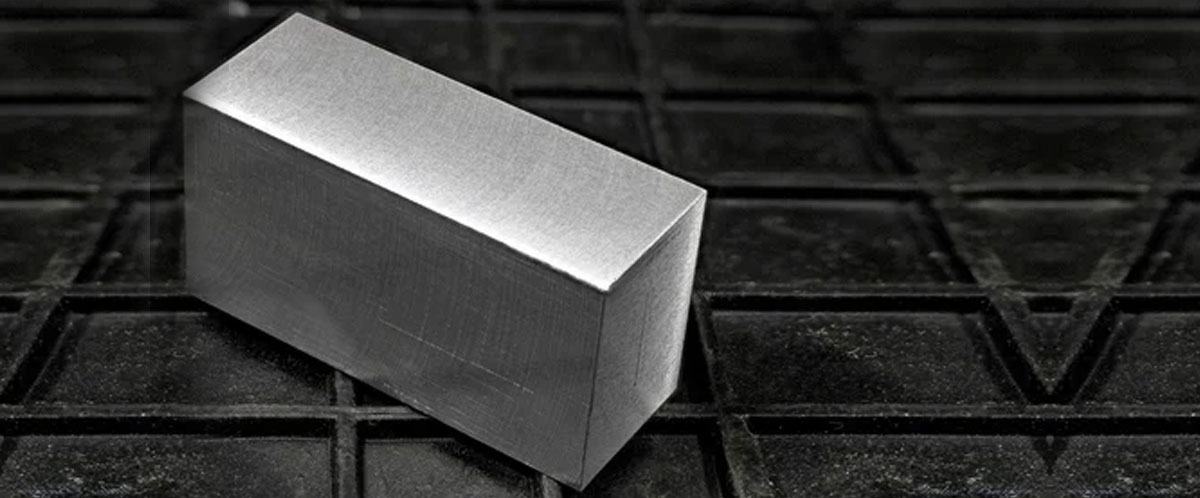
In the world of aluminium machining and fabrication, the words “block” and “plate” are often used interchangeably — yet they refer to materials designed for very different purposes.
While both come from the same high-grade rolled or forged aluminium stock, their thickness, grain structure, and stress treatment determine how they behave under cutting tools, welding torches, or structural loads.
Understanding the real difference between aluminium blocks and plates can help you avoid costly machining errors, reduce waste, and ensure your project meets dimensional, mechanical, and economic targets.
What Is an Aluminium Plate?
An aluminium plate is a rolled product manufactured in large sheets with a thickness typically between 6 mm and 150 mm.
Plates are known for their uniform grain orientation, smooth mill finish, and consistent mechanical properties across the surface — ideal for:
- Fabricated structures
- Marine decks
- Pressure vessels
- Architectural panels
- General engineering components
They are commonly supplied as 6061-T6, 6082-T6, 5083-H111, or 7075-T6 plates, produced under standards like ASTM B209 and EN 485-2.
🧩 Key Characteristics
- Excellent flatness and surface finish
- Easy to cut and weld
- Available in large sheet formats (1000 mm × 2500 mm and above)
- Best for fabrication and construction applications
What Is an Aluminium Block?
An aluminium block (also called a billet or slab) is a solid, thick section — often exceeding 150 mm in thickness — designed for heavy machining, mould making, and tooling.
Blocks are usually stress-relieved (T651 temper) and may be forged, cast, or precision-milled to achieve superior dimensional stability.
They are preferred when components require deep cutting, drilling, or multiple tool passes where plate material would distort.
⚙️ Key Characteristics
- Supplied as solid sections up to 600 mm thick
- Stress-relieved for CNC machining (T651 condition)
- Ideal for dies, mould bases, and precision jigs
- Excellent dimensional stability under heavy tool loads
Why This Distinction Matters in Engineering
The difference between a block and a plate isn’t just geometry — it’s performance.
Choosing the wrong form factor can result in:
- Warping during machining due to internal stress in thin plates
- Over-spending on solid blocks when a plate could suffice
- Inconsistent flatness affecting mould fitment or CNC alignment
For high-precision jobs, using stress-relieved T651 blocks eliminates residual stress and ensures tight tolerances.
For structural fabrication, rolled plates deliver better weldability, cost efficiency, and ease of handling.
💬 Common Questions Buyers Ask
- “Is a block stronger than a plate?”
- “Can I machine a plate like a block?”
- “What’s the cost difference between plate and block material?”
- “When should I use T651 block instead of T6 plate?”
This guide answers all those questions with clear data, real-world use cases, and expert sourcing tips — helping you choose not just an aluminium grade, but the right form for your application.
⚙️ Technical Comparison: Aluminium Block vs Aluminium Plate
While both aluminium blocks and plates are made from the same alloys (such as 6061, 6082, 7075, and 5083), the way they are manufactured, treated, and used makes a world of difference in dimensional stability, machinability, and performance.
Below is a comprehensive, engineer-friendly comparison that simplifies the choice between both forms.
Aluminium Block vs Plate – Technical Comparison Table
| Parameter | Aluminium Plate | Aluminium Block |
|---|---|---|
| Thickness Range | 6 mm to 150 mm (typical) | 150 mm to 600 mm (or custom) |
| Manufacturing Method | Hot / cold rolled | Forged, cast, or rolled slab |
| Temper Availability | T6, H111, H112 | T6, T651 (stress-relieved) |
| Internal Stress Level | Moderate | Very low (stress-relieved) |
| Flatness Accuracy | Good | Excellent (T651) |
| Machinability | Very good | Excellent for deep cutting & precision milling |
| Weldability | Excellent | Moderate (less preferred for welding) |
| Corrosion Resistance | Excellent (especially 5083 & 6082) | Excellent (if anodized or coated) |
| Surface Finish | Smooth mill finish | Machined or saw-cut finish |
| Dimensional Stability | Moderate | High (resists warping & distortion) |
| Cost | Economical | Slightly higher due to density & treatment |
| Typical Size Availability | 1000 mm × 2500 mm | 500 mm × 1500 mm × 300 mm (custom) |
🧩 Manufacturing Process Insight
Aluminium Plates – Rolled Precision Sheets
Plates are rolled between heavy rollers under controlled temperature to achieve uniform grain orientation and consistent mechanical properties across the surface.
They are then heat-treated (T6 or H111) and supplied in flat sheet form.
✅ Benefits:
- Smooth finish and tight gauge control
- Lightweight and easy to handle
- Readily weldable for fabrication
- Lower cost per kg
🚫 Limitations:
- May develop stress during machining on thick sections
- Less suitable for deep drilling or multi-axis CNC milling
Aluminium Blocks – Stress-Relieved Solid Sections
Blocks are typically forged or cast slabs that undergo heat treatment and mechanical stretching (T651 temper) to eliminate internal stress pockets.
They’re precision-milled to achieve perfect flatness and uniform hardness, making them ideal for high-speed CNC machining, mould bases, and aerospace jigs.
✅ Benefits:
- Extremely stable under machining loads
- Higher thickness and rigidity
- Reduced vibration and warpage during cutting
- Compatible with high-tolerance applications
🚫 Limitations:
- Slightly higher cost due to processing
- Heavier to handle and transport
- Overkill for general fabrication jobs
🏭 Industry-Specific Applications
| Industry | When to Use Aluminium Plate | When to Use Aluminium Block |
|---|---|---|
| Marine & Offshore | Deck structures, hulls, gangways (6082, 5083 plates) | Not recommended – blocks are too heavy |
| Aerospace & Defence | Structural panels, ribs (6061 plates) | Tooling jigs, fixtures, dies (7075 T651 blocks) |
| Automotive & EV | Chassis, brackets, battery trays | Machined components, prototype parts |
| Tooling & Mould Making | Base plates for dies | Mould cores, tool bases, precision fixtures |
| Architecture & Fabrication | Cladding, roofing, railings | Custom machined facades or CNC-milled frames |
| Industrial Machinery | Machine guards, tables | Precision platens, base frames, press tools |
Quick Engineering Insight:
If your design involves milling from all six sides, always choose T651 aluminium block.
If your design involves cutting, welding, or bending, a T6 aluminium plate is the more cost-effective and efficient option.
Material Grades Commonly Used in Each Form
| Grade | Common in Plates | Common in Blocks | Remarks |
|---|---|---|---|
| 6061 | ✅ | ✅ | Best all-rounder for machining and fabrication |
| 6082 | ✅ | ✅ | Marine grade; higher strength than 6061 |
| 7075 | ⚪ | ✅ | Aerospace-grade; very high tensile strength |
| 5083 | ✅ | ⚪ | Marine grade; corrosion-resistant |
| 2014 / 2024 | ⚪ | ✅ | Copper-based alloys for aerospace tools |
Mould Manufacturer Case
A mould manufacturer in Pune initially used 6061-T6 plates to machine die bases up to 120 mm thick.
During deep milling, the plates experienced 0.4 mm warpage and uneven clamping pressure, leading to rework losses.
Switching to 6061-T651 aluminium blocks solved the problem:
- Flatness tolerance improved to ±0.05 mm
- Machining speed increased by 25%
- Rework eliminated completely
💡 Conclusion: The cost of T651 blocks was 8% higher — but total production cost dropped by nearly 15% due to reduced re-machining and polishing time.
Comparison
Q: What’s the main difference between aluminium block and plate?
A block is a thicker, stress-relieved solid section for machining; a plate is a rolled sheet for fabrication and welding.
Q: Which is stronger — block or plate?
Strength depends on alloy and temper, not the form, but blocks offer higher stability during machining.
Q: Which is more cost-effective?
Plates are cheaper per kg; blocks cost more but reduce machining time and waste in high-precision work.
Global Supply & Export Capability
At Solitaire Steel & Engineering LLP, we supply both Aluminium Plates and Aluminium Blocks in all major alloys — 6061, 6082, 7075, 2014, and 5083 — across T6 and T651 tempers.
Whether you’re machining aerospace tooling, building marine structures, or fabricating industrial assemblies, our materials are manufactured, tested, and packaged to international standards.
Certifications & Standards:
- ASTM B209 / ASME SB209 / EN 485-2 / IS 737
- EN 10204 3.1 MTC traceability
- UT 100 % tested, hardness & tensile verified
- Dimensional inspection reports on request
Export Destinations:
UAE | Saudi Arabia | Vietnam | Germany | USA | Canada | Australia | South Africa | Qatar | Malaysia
Each shipment is export-packed in seaworthy pallets with moisture protection, barcoding, and heat numbers for full traceability — ready to reach your port on time, in perfect condition.
Aluminium Block vs Plate
Choosing between a block and a plate isn’t just a matter of thickness — it’s a decision that affects machining stability, material yield, and total project cost.
Use the table below to decide which one fits your application.
| Project Requirement / Scenario | Recommended Form | Reason / Advantage |
|---|---|---|
| CNC machining of moulds, jigs, dies | Aluminium Block (T651) | Stress-relieved; prevents warping and vibration during heavy milling |
| General fabrication, welding, or structural work | Aluminium Plate (T6) | Cheaper, lighter, and easier to cut or bend |
| Marine or outdoor applications | Aluminium Plate (6082 / 5083) | Excellent corrosion resistance; large surface coverage |
| Aerospace or defence tooling | Aluminium Block (7075 T651) | Ultra-high strength and fatigue resistance |
| Precision machining with multi-axis CNC | Aluminium Block (T651) | Dimensional stability across multiple operations |
| Architectural or decorative components | Aluminium Plate (6061 T6) | Better anodizing and surface aesthetics |
| Prototyping or small-batch builds | Aluminium Plate | Cost-effective and readily available |
If your part is machined from six sides or requires deep drilling, use T651 aluminium blocks.
If it’s cut, welded, or bent, a T6 plate is more practical and cost-efficient.
FAQs
Q1. What’s the main difference between aluminium block and plate?
A block is a thicker, stress-relieved section (150 mm +) designed for CNC machining; a plate is a rolled sheet (≤150 mm) used for fabrication and welding.
Q2. Are aluminium blocks stronger than plates?
Not necessarily — strength depends on alloy and temper. However, blocks maintain better dimensional stability under machining loads.
Q3. Can I machine an aluminium plate instead of a block?
Yes, but thick plates may warp during deep cutting. For precision moulds or jigs, use T651 blocks.
Q4. Which is more cost-effective — block or plate?
Plates are cheaper per kg, but blocks save time and reduce rework in precision jobs — lowering total project cost.
Q5. Which alloys are available as both blocks and plates?
6061, 6082, 7075 and 2014 are available in both forms; 5083 is mainly available as plate.
Q6. What temper is best for machining — T6 or T651?
T651. It’s stress-relieved after heat treatment and stays perfectly flat during machining.
Q7. Do you export aluminium blocks and plates internationally?
Yes, Solitaire Steel & Engineering LLP exports certified aluminium products to 45 + countries with full documentation and port delivery.
Q8. Can aluminium blocks and plates be anodized?
Yes — 6061 and 6082 anodize beautifully. 7075 may require pre-treatment for uniform colour.
Talk to Our Technical Experts
⚙️ Still unsure whether your project needs an aluminium block or plate?
Speak directly with our engineering team for grade selection, temper advice, and cost optimization.
📩 Email: info@solitairesteelllp.com
📱 Call / WhatsApp: +91 9819046580
🌐 Request a Quote: [Talk to Our Expert]
We offer:
- Cut-to-size blocks and plates
- Custom machining tolerance control
- Surface finishing (anodized, polished, brushed)
- Rapid export dispatch from Mumbai
Summary – Form Defines Function
Both aluminium blocks and aluminium plates share the same DNA — lightweight, corrosion-resistant, and strong.
But how they perform depends on how they’re made and how you use them.
- Choose plates (T6) for fabrication, welding, and cost efficiency
- Choose blocks (T651) for CNC machining, precision dies, and high-tolerance work
At Solitaire Steel & Engineering LLP, we combine material science and machining insight to supply aluminium that performs flawlessly — from the first cut to the final polish.
When accuracy, strength, and reliability matter — choose the form that shapes your success.