
Choosing the right aluminium block isn’t as simple as picking a metal by grade or price — it’s about balancing strength, machinability, corrosion resistance, and cost for your exact application.
In aerospace, marine, and precision tooling industries, this choice determines whether your final part will perform reliably or fail under stress.
With multiple alloys and tempers — 6061, 6082, 7075, 5083, 2014, 2024 — and conditions like T6 or T651, buyers often face confusion:
Which one gives the best machining results?
Does higher strength mean harder machining?
Is T651 worth the premium?
This comprehensive guide explains everything you need to know — from alloy families and temper selection to dimensional tolerances and export readiness — so you can make a performance-driven, cost-efficient decision.
Understanding the Basics: What Is an Aluminium Block?
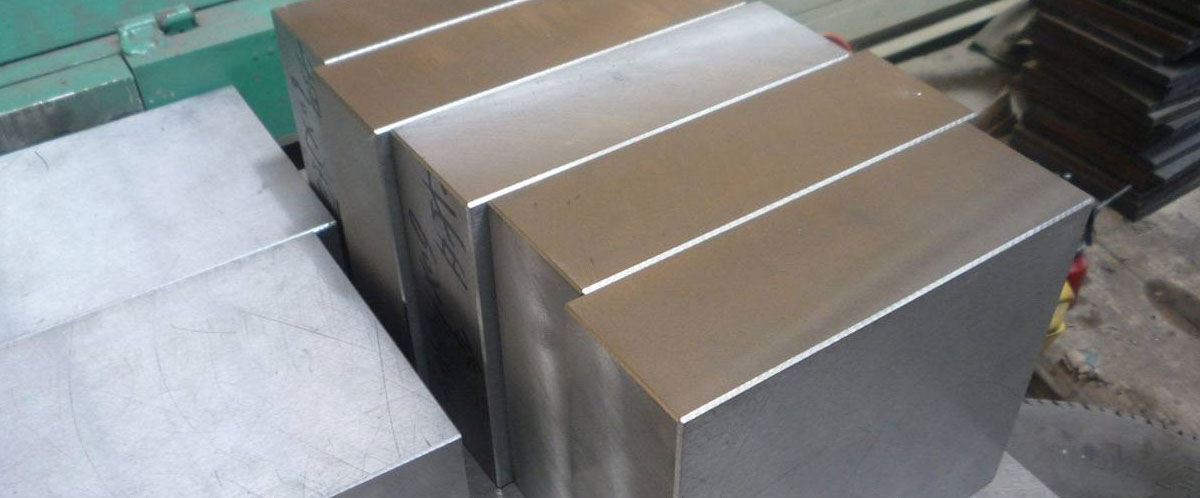
An aluminium block is a solid, heat-treated section of aluminium alloy used for machining, mould making, or structural components.
Unlike sheets or plates, blocks are thicker (often 150 mm to 600 mm) and typically stress-relieved (T651 temper) to ensure perfect flatness under heavy machining.
Blocks are available in both rolled and forged forms, each with different internal grain structures and mechanical characteristics.
In short:
- Plates are for fabrication and welding
- Blocks are for CNC machining, tooling, and dies
Why Alloy Selection Matters
Each aluminium alloy has a distinct mix of magnesium, silicon, zinc, manganese, or copper, giving it unique mechanical behavior.
The alloy you choose will affect:
- Strength and stiffness of the final part
- Machinability and tool life
- Surface finishing quality
- Resistance to corrosion and heat
- Total fabrication cost and rejection rate
A poorly chosen grade can lead to warping, poor surface finish, or cracking during high-speed machining — especially in aerospace or die applications where tolerances are critical.
Factors That Define “Right” Aluminium Block
- Application Type: Aerospace, tooling, marine, or general fabrication.
- Operating Environment: Indoor, outdoor, humid, or high-temperature use.
- Load Requirement: Whether the part faces static or cyclic loads.
- Machining Depth: Shallow vs. deep milling operations.
- Weldability Needs: For assemblies vs. one-piece parts.
- Surface Finish or Anodizing Requirement: For aesthetic or corrosion protection.
- Budget: Balancing cost per kg vs. performance per part.
Selecting aluminium correctly is like choosing the right engine for a car — the alloy and temper define how far and how fast your project can go before performance starts to fade.
Common Buyer Questions
- “Should I use 6061 or 6082 for my fixture block?”
- “Why is 7075 more expensive — and is it really better?”
- “Do I need T651 temper for small jobs?”
- “Which grade machines best for precision moulds?”
You’ll find all these answered — with technical tables, industry examples, and buyer checklists — in the next sections.
⚙️ Grade-Wise Comparison: Which Aluminium Block Fits Your Application?
The right aluminium block depends on where and how it’s used. Below is a simplified, engineer-friendly comparison of the five most in-demand alloys used in India and global markets for machining, tooling, and fabrication.
Aluminium Alloy Comparison Table
| Property | 6061 T6/T651 | 6082 T6/T651 | 7075 T6/T651 | 5083 H111/H112 | 2014 / 2024 T6 |
|---|---|---|---|---|---|
| Type | Structural / General Purpose | Marine / Structural | Aerospace / High-Strength | Marine / Corrosion-Resistant | Aerospace / High-Temp |
| Tensile Strength (MPa) | 290–310 | 310–340 | 570–600 | 275–320 | 400–460 |
| Yield Strength (MPa) | 240–275 | 260–300 | 500–540 | 200–250 | 360–400 |
| Elongation (%) | 12–17 | 10–15 | 8–11 | 16–20 | 10–13 |
| Hardness (HB) | 95–105 | 100–115 | 150–160 | 80–90 | 120–130 |
| Machinability | Excellent | Very Good | Good (needs carbide tooling) | Fair | Good |
| Corrosion Resistance | Excellent | Excellent | Moderate | Outstanding | Moderate |
| Weldability | Excellent | Good | Poor | Excellent | Poor |
| Cost (Relative) | ₹₹ | ₹₹₹ | ₹₹₹₹ | ₹₹ | ₹₹₹₹ |
| Best Used For | Jigs, fixtures, frames, machine parts | Marine & offshore structures | Aerospace tooling, mould bases | Shipbuilding, storage tanks | Defence, high-temp parts |
Step-by-Step Selection Guide: How to Choose the Right Aluminium Block
Step 1 – Define Your End Use
Ask: “What function will this component serve?”
- If it needs machining precision, focus on T651 tempers (stress-relieved).
- If it needs welding or bending, choose T6 or H111 plates.
- If it’s for aerospace or die tools, go for 7075 or 2014.
🧭 Example:
A die base for a packaging mould → use 7075-T651 block.
A marine ladder or frame → use 6082-T6 plate.
A robotic fixture → use 6061-T651.
Step 2 – Match the Mechanical Strength to Your Load
Each alloy has a strength-to-weight ratio tailored for specific stress levels.
- 7075 offers steel-like strength for high-load aerospace parts.
- 6082 offers moderate strength but high corrosion protection.
- 6061 balances both — ideal for structural fabrication.
📈 Engineering Insight:
If your design involves cyclic or vibrational loads (like machinery or vehicles), higher yield strength (7075) ensures fatigue resistance.
For static or welded assemblies, 6061 and 6082 are ideal.
Step 3 – Choose the Right Temper
The temper defines how the aluminium was treated after manufacturing.
| Temper | Meaning | Best For |
|---|---|---|
| T6 | Heat-treated and artificially aged | General fabrication, welding |
| T651 | T6 + stress-relieved by stretching | CNC machining, mould bases |
| H111 / H112 | Work-hardened, non-heat-treated | Marine, low-pressure vessels |
| O (Annealed) | Soft, easy to form | Complex bending or shaping |
If your project demands flatness and dimensional accuracy, always choose T651.
If you’re welding or forming, T6 or H111 will perform better.
Step 4 – Consider Machining & Finish Requirements
If your part will undergo multi-axis machining, choose alloys with high machinability ratings:
- ✅ 6061-T651 → Excellent for CNC fixtures and jigs.
- ✅ 7075-T651 → Superb for high-speed cutting and tooling.
- ⚙️ 6082-T6 → Good for marine or architectural parts needing anodized finishes.
- ❌ 5083-H111 → Not ideal for machining-heavy jobs.
For aesthetic finishes like anodizing or polishing, 6061 and 6082 produce a smoother, uniform finish compared to copper-bearing alloys (2014, 2024).
Step 5 – Balance Cost vs. Performance
It’s common for buyers to over-specify.
A good rule of thumb:
- If strength + precision are key → go for 7075-T651.
- If corrosion + weldability matter → pick 6082 or 5083.
- If balanced performance and budget matter → choose 6061-T651.
Industry Applications Overview
| Industry | Recommended Alloys | Preferred Temper | Application Examples |
|---|---|---|---|
| Aerospace & Defence | 7075, 2024 | T651 | Aircraft jigs, weapon systems, landing gear |
| Marine & Offshore | 6082, 5083 | T6 / H111 | Ship hulls, gangways, ladders |
| Automotive & EV | 6061, 6082 | T6 / T651 | Suspension arms, engine mounts, battery frames |
| Tooling & Moulds | 7075, 2014 | T651 | Mould bases, dies, CNC jigs |
| General Engineering | 6061 | T6 / T651 | Machine frames, fixtures, tables |
Real-World Case Study
A CNC mould shop in Ahmedabad switched from 6061-T6 plates to 7075-T651 aluminium blocks for precision die bases.
Results after 3 months:
- Machining speed improved by 25%
- Dimensional rework reduced by 80%
- Surface finish improved from Ra 3.2 → 1.6 μm
- Tool life increased due to better chip control
Though 7075 cost more upfront, total production efficiency increased by 18%, proving that choosing the right aluminium block saves time, money, and credibility.
Voice-Snippet Summary
Q: How do I choose the right aluminium block for my project?
Match your application to the alloy: 6061 for general use, 6082 for marine, 7075 for aerospace or tooling, and 5083 for corrosion-prone environments.
Q: What is the most commonly used aluminium block for CNC machining?
6061-T651 is the most popular — it machines beautifully, stays flat, and is affordable.
Q: Which aluminium block is strongest?
7075-T651 offers the highest strength, almost equal to mild steel.
7 Key Questions Before Purchasing an Aluminium Block
Choosing the correct aluminium block involves more than alloy and size — it’s about ensuring your supplier delivers quality, consistency, and traceability.
Here’s a 7-step checklist every buyer should review before placing an order:
| ✅ Check | 🧠 What to Look For |
|---|---|
| 1. Verify Alloy & Temper | Confirm the exact grade (e.g., 6061-T651, 6082-T6, 7075-T651) and ensure test certificates (EN 10204 3.1 MTC) are included. |
| 2. Inspect Flatness & Surface Finish | Ensure the block is precision-sawn or milled flat to ±0.1 mm tolerance — essential for CNC setups. |
| 3. Ask About Stress Relief Process | Always choose T651 for deep machining; T6 may warp during heavy cutting. |
| 4. Confirm Mechanical Test Reports | Look for tensile, hardness, and elongation results per ASTM B209 or equivalent. |
| 5. Check for UT (Ultrasonic) Certification | UT 100% ensures internal soundness and eliminates porosity risk. |
| 6. Request Cut-to-Size & Packaging Options | Avoid buying full-size blocks if you only need specific dimensions — it reduces cost and wastage. |
| 7. Review Export Readiness | Ask if the supplier provides export packing, fumigation, and country-specific documentation (UAE, Europe, etc.). |
📌 Pro Tip: Always choose a supplier who provides machining-friendly blocks (T651) with verified certificates and moisture-proof export packaging.
Why Choose Solitaire Steel & Engineering LLP
At Solitaire Steel & Engineering LLP, Mumbai, we’ve spent years helping tooling engineers, aerospace contractors, and OEMs pick aluminium that performs flawlessly in production.
Here’s why global buyers trust us:
✅ One-Stop Inventory — 6061, 6082, 7075, 5083, 2014, 2024 in T6, T651, and H111 tempers
✅ Cut-to-Size Supply — From 20 mm to 600 mm thickness, CNC-sawn blocks ready for machining
✅ Quality Assurance — Each block comes with EN 10204 3.1 MTC, UT 100%, and hardness reports
✅ Surface Finish Options — Mill, anodized, polished, or sandblasted
✅ Fast Export Dispatch — 48–72 hr delivery window from Mumbai port
✅ Proven Export Network — UAE, Saudi Arabia, Vietnam, Germany, USA, and South Africa
Every block is individually barcoded, ensuring traceability from mill to machine.
Recommended Alloy by Application
| Industry / Use Case | Recommended Alloy & Temper | Reason / Advantage |
|---|---|---|
| CNC Tooling & Moulds | 7075-T651 | Ultra-high strength, stable under heavy cutting |
| General Machining | 6061-T651 | Excellent machinability and balance of cost/performance |
| Marine Equipment | 6082-T6 / 5083-H111 | Superior corrosion resistance |
| Aerospace Jigs | 7075-T651 / 2024-T6 | High fatigue resistance, lightweight |
| Automotive Parts | 6061-T6 | Ideal for lightweight chassis components |
| Structural Fabrication | 6082-T6 | Great weldability and strength |
| Defence Systems | 2014-T6 | Copper-based strength for rugged applications |
FAQs
Q1. What is the best aluminium block for CNC machining?
6061-T651 is the most widely used aluminium block for CNC because it’s stress-relieved, flat, and easy to machine.
Q2. Which aluminium block is strongest?
7075-T651 offers the highest tensile strength — almost equivalent to mild steel — ideal for aerospace and tooling.
Q3. What does T651 mean in aluminium blocks?
It’s a temper condition that combines T6 heat treatment with stress relief by stretching — ensuring dimensional stability.
Q4. Which aluminium grade is best for marine use?
6082 and 5083 are best for marine environments due to high magnesium content and superior corrosion resistance.
Q5. How do I avoid aluminium block warping during machining?
Always use stress-relieved T651 blocks and ensure uniform clamping during high-speed milling.
Q6. Can aluminium blocks be anodized or coated?
Yes — 6061 and 6082 anodize beautifully; 7075 may require pre-treatment for uniform coating.
Q7. What size aluminium blocks are available?
Thickness ranges from 20 mm to 600 mm, with widths up to 1500 mm and custom lengths up to 3000 mm.
Q8. Do you export aluminium blocks internationally?
Yes — Solitaire Steel & Engineering LLP exports certified aluminium blocks to over 40 countries with full documentation.
Get Expert Help Before You Buy
🧠 Still not sure which aluminium block fits your project?
Our technical experts can help you choose the right alloy, temper, and tolerance — saving cost and rework.
📩 Email: info@solitairesteelllp.com
📱 Call / WhatsApp: +91 9819046580
🌐 Request a Quote: [Talk to Our Expert]
We provide:
- Cut-to-size machining-ready aluminium blocks
- Custom heat treatment and temper options
- Export packaging & traceability certificates
- Bulk and retail quantities with quick turnaround
Choose Smart, Machine Strong
Selecting the right aluminium block is the difference between precision and rework, profit and loss.
Each alloy — from 6061 to 7075 — has its strengths, but success lies in matching the material to your application, machining depth, and tolerance needs.
At Solitaire Steel & Engineering LLP, we don’t just sell metal — we deliver engineering confidence.
From marine-grade 6082 to aerospace 7075, every block is inspected, certified, and ready to perform where it matters most — on your machine bed.
🧰 Choose smart, cut clean, and let your aluminium block define your precision.